
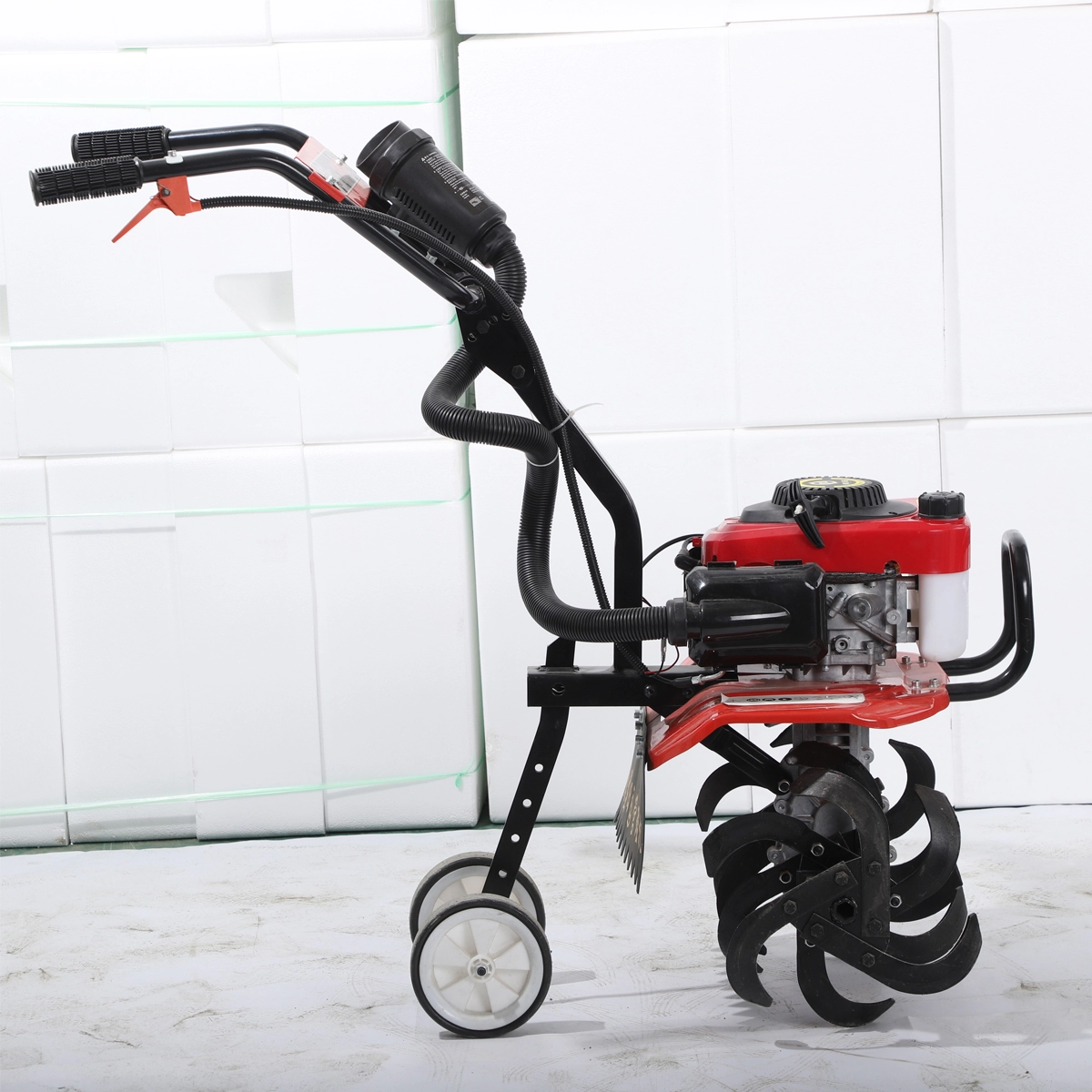
How to Choose a Mini Power Tiller: Specifications That Actually Matter in the Field
Most mini tiller buyers compare horsepower first. In practice, horsepower is one of the weakest predictors of how a machine performs on your land. Tilling width, rotor speed, blade geometry, engine stroke type and gearbox construction decide whether a tiller prepares seedbed in two passes or four — and whether it still starts reliably in season three.
Start with the terrain, not the engine
Every tiller specification is a compromise, and the terrain decides which side of that compromise you should accept. Before comparing model numbers, describe the land you actually work.
| Terrain type | Tilling challenge | What to prioritise |
|---|---|---|
| Dry flat farmland | Hard, compacted topsoil | Higher engine torque, deeper tilling depth, wider rotor |
| Rice paddy / wet clay | Soil sticks to blades; machine sinks | Wide lugged wheels, sealed bearings, higher ground clearance |
| Orchard rows | Narrow access, tree roots | Compact tilling width, adjustable handlebar offset |
| Greenhouse / tunnel | Very limited headroom and turning space | Low handlebar height, light machine weight, easy reverse |
| Hillside terraces | Sideways slip, operator fatigue | Low centre of gravity, anti-vibration mounts, secure grip tyres |
| Vegetable plots / raised beds | Frequent shallow passes between crops | Fast blade engagement, fine tilth at shallow depth |
A tiller that wins on flat dry farmland is frequently the worst choice for a hillside orchard. This is why two tillers with identical engine displacement can deserve completely different recommendations.
Two-stroke vs four-stroke: the real trade-off
The stroke type is the single most consequential decision because it determines weight, fuel handling, exhaust emissions and how the machine behaves when the rotor bites into hard soil.
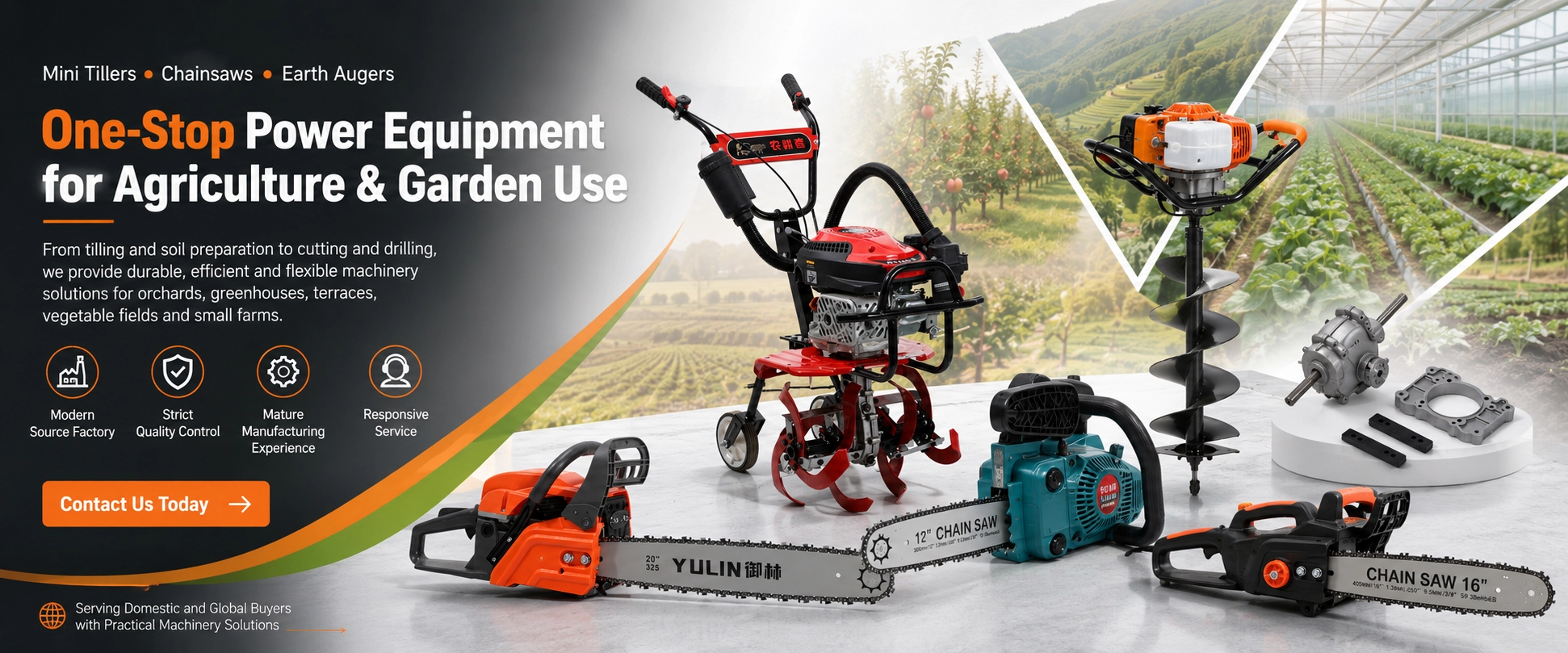
| Characteristic | Two-stroke | Four-stroke |
|---|---|---|
| Power-to-weight ratio | Higher — lighter machine for the same output | Lower — additional valve train and oil sump add mass |
| Torque at low rotor speed | Peakier; needs to be kept in its power band | Broader and flatter; resists stalling under load |
| Fuel system | Petrol mixed with two-stroke oil in a fixed ratio | Separate fuel and oil — independent oil tank |
| Emissions and noise | Higher emissions, sharper exhaust note | Lower emissions, noticeably quieter operation |
| Best suited to | Light, carried machines; hillside and terrace work | Long working days; dryland and paddy tillage |
Manufacturers have also closed much of the emissions gap on four-stroke platforms in recent years. Modern units meet substantially stricter standards than the two-stroke engines of a decade ago, which matters directly if you sell into markets with regulated exhaust requirements.
Blade geometry and tilling width
Blade design determines the quality of the seedbed far more than advertised power. Three variables matter most.
- Tilling width. Wider is not automatically better. A wide rotor on soft, light soil covers ground quickly, but the same rotor on heavy clay demands more torque than the engine can deliver and the machine simply stalls. Match width to soil type, then to available power.
- Blade count and profile. Curved, hook-shaped blades slice and lift soil; straight blades chop and mix. Soils with heavy crop residue respond better to straight blades, while compacted ground benefits from the lifting action of curved blades.
- Rotor speed. High rotor speed produces a fine tilth but throws soil and increases wear. Multi-speed gearboxes let the operator trade rotor speed against forward speed, which is the most useful single feature on varied land.
Choosing blades for your soil
| Soil condition | Recommended blade type | Reason |
|---|---|---|
| Compacted / uncultivated | Heavy-duty curved hook blades | Aggressive penetration and soil lifting |
| Previously tilled, light soil | Standard curved blades or slasher blades | Fine tilth with lower power demand |
| Heavy residue / stubble | Straight or C-shaped blades | Cuts through trash instead of wrapping around the shaft |
| Stony ground | Reinforced blades with thicker gauge | Resists edge chipping and premature fracture |
Blades are consumables. A machine with easily available replacement blades will stay in service for years, while an identical machine with a proprietary blade no one stocks becomes unusable after the first season. Confirm blade availability before you buy the machine, not afterwards.
Gearbox, frame and the parts that fail first
The transmission is where cheap machines reveal themselves. Ask specifically about these components:
- Gearbox construction. Cast or forged gears running in an oil bath outlast pressed or sintered gears running in grease. The difference is invisible from outside and decisive after two seasons.
- Frame material. Thick-wall steel tubing resists frame flex. A frame that flexes changes blade-to-soil geometry under load and causes uneven tilling depth.
- Bearing sealing. Dust and water are the primary killers of tiller bearings. Double-lip seals and sealed-for-life bearings are worth the premium in dry, dusty conditions.
- Clutch and drive belt. Confirm the drive belt type and whether it can be tensioned without dismantling the machine.
- Fastener quality. Vibration loosens poorly specified bolts. Locking washers and grade-rated fasteners on the rotor housing are a genuine durability signal.
Interchangeable attachments and multi-scenario use
One power unit with a range of attachments covers more ground than several single-purpose machines, provided the attachment interface is genuinely standardised. Look for a common coupling system so that a tiller can be converted for ridging, furrowing or weeding without new tooling.
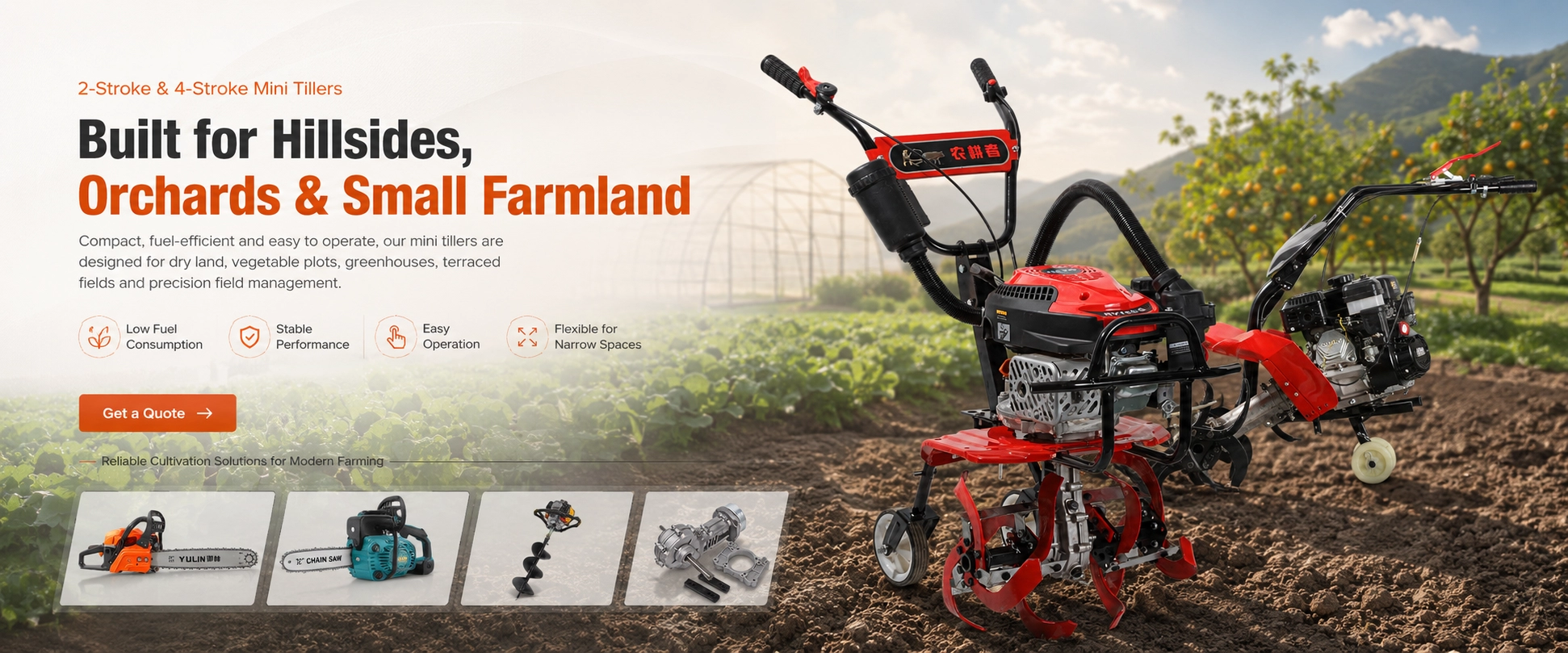
Typical attachments worth planning for include ridging ploughs, furrow openers, ditching blades and weeding rotors. Buying the power unit with the attachment interface included costs far less than adding an incompatible second machine later.
An eight-point purchasing checklist
- Describe your terrain in writing. Slope, soil type, plot size and access width first.
- Confirm engine stroke and displacement against the terrain analysis, not against a competitor's marketing claim.
- Verify real tilling width and depth with a tape measure on the actual unit, not from the brochure.
- Inspect the gearbox type — oil bath versus grease, and gear material.
- Check blade availability and price for your region before ordering.
- Test the anti-vibration system by running the machine at full rotor speed and holding the handlebars.
- Confirm the attachment interface and list the attachments you will actually use.
- Agree on spare parts support — which components ship as a standard kit and at what lead time.
Frequently asked questions
Is a larger engine always better for hard soil?
No. In heavy clay, tilling width and rotor speed matter more than raw power. An oversized engine bolted to an over-wide rotor still stalls; a correctly matched narrower rotor with adequate torque keeps working.
Can one tiller handle both dryland and paddy?
With the right wheels and sealed bearings, yes. The critical adaptations are lugged or cage wheels for flotation in wet soil and properly sealed bearings to exclude water and fine silt.
How long should a mini tiller last?
Service life depends overwhelmingly on the gearbox, frame thickness and bearing sealing rather than on engine brand. Machines with oil-bath gearboxes and sealed bearings routinely deliver many seasons of work when blades and belts are replaced on schedule.
Tell us about your terrain
Nacheng Machinery manufactures mini power tillers, chainsaws and earth augers in Yongkang, Zhejiang Province. Send us your slope, soil type and plot size, and we will recommend the specification that fits — contact our export team.